What is the Difference Between Generative Engine Optimization (GEO) and Search Engine Optimization (SEO)

Online marketing environment is changing at a very fast pace. Internet presence has over the years been founded on search engine optimization (SEO). Nevertheless, nowadays when artificial intelligence-based applications, such as ChatGPT, Google Search Generative Experience (SGE), Microsoft Copilot, and other generative AI applications are trendy, a new theory was introduced: Generative Engine Optimization (GEO).

The blog gives a description of what SEO and GEO are, their difference, and the relevance of a business organization being aware of both of them so that it would be able to remain competitive in the contemporary world of digitalism.


1. What Is Search engine optimization (SEO)?

Search Engine Optimization (SEO) can be defined as an optimization process in a bid to place the websites and contents on the first place in the list of the conventional search engines like Google, Bing, and Yahoo.

Key Characteristics of SEO:

  • Concentrates on the result pages of the search engines (SERPs)
  • Targets achievement of organic traffic.
  • Bases on priority of services algorithm.
  • Makes the visitors use links to visit sites.

Main Components of SEO:

  • On-Page SEO


  • Keyword optimization


  • Meta titles and description.


  • Content quality


  • Internal linking


  • Off-Page SEO


  • Backlinks


  • Brand mentions


  • Social signals


  • Technical SEO


  • Website speed


  • Mobile-friendliness


  • Site structure


  • Indexing and crawling

Example of SEO:

  • The search query is one of the following: Best digital marketing course in India.
  • Google provides a list of ranked listings.
  • The user makes a choice by clicking on one of the most efficient results.
  • Keywords, rankings and clicks to a large extent determine the success of SEO.

2. Generative Engine Optimization (GEO): Its Meaning?

The solution to this is Generative Engine Optimization (GEO) or making things easier to understand with the help of generative engines that utilize AI technology to generate and provide a direct query answer.

  • Generative engines: in contrast to a presentation of just links, generative engines:
  • Summarize information
  • Give conversational responses.
  • Suggest solutions or brands.

Key Characteristics of GEO:

  • Listens to the artificially intelligent responses.
  • Reflecting on the sense and gluteness.
  • Economizing in questions and purposes.
  • Gives value to credibility, power and order.
  • It does not always imply coming up with direct clicks on the site.

Platforms Where GEO Matters:


  • ChatGPT
  • Google SGE
  • Microsoft Copilot
  • Perplexity AI
  • Voice assistants (growth potential)

Example of GEO:

The query that could be presented by a user is: What is the best course of digital marketing to undertake as a novice?

Artificial solution can be given by a natural intelligence.

Your brand is mentioned or referred.

3. Nevertheless, some of the fundamental distinctions between GEO and SEO are as follows.

1. Platform Focus


  • SEO: The conventional search engines.
  • GEO: Generative generalized engines.

2. Output Format

  • SEO: List of blue links
  • GEO: Emerging questions, summaries, recommendations.

3. User Behavior


  • SEO: Clicks and web site exploration.
  • GEO: User is the one that is pressed to get the answers.

4. Comparison of Costs of SEO and GEO.

1. Goal

  • SEO:

Rank higher on SERPs

Drive organic traffic

  • GEO:

Make it ready in the responses of AI.

Create brand awareness and brand presence.

2. Content Optimization Style

  • SEO:

Keyword density

Search volume targeting

Headings for ranking

  • GEO:

Natural language

Clear explanations

Properly organized factual data.

3. Content Structure

  • SEO:

Keywords optimized blogs.

Focus on skimmability

  • GEO:

Bullet points

Numbered steps

Definitions and brief descriptions.

4. Measurement of Success

SEO Metrics:

  • Rankings
  • Organic traffic
  • Click-through rate (CTR)

GEO Metrics:

  • AI mentions
  • Brand visibility in answers
  • Authority signals

5. Intent Optimization and Keyword Optimization.

SEO Keyword Focus:

  • High-volume keywords
  • Long-tail keywords
  • Keyword placement
  • Keyword competitiveness

GEO Intent Focus:


  • User questions
  • Conversational queries
  • Context and meaning
  • Problem-solving content
  • Example:
  • SEO keywords: digital marketing course.
  • GEO query: What is the digital marketing course that I can do as a beginner?

6. Role of Authority and Trust In SEO:

  • Backlinks signal authority
  • Domain age matters
  • Ranking is affected by page authority.

In GEO:

  • The information credibility is obligatory.
  • There are evident sources and experience that AI depends on.
  • The regularity of communication over the brand enhances inclusiveness.

AI engines prioritize:

  • Accurate data
  • Clear explanations
  • Expert-level content

7. Content viewability: Clicks vs Mentions. SEO Visibility:

  • Website visits
  • Page views
  • Landing page conversions.

GEO Visibility:

  • Brand mentions in AI answers
  • Suggested tools or services
  • Top-of-mind awareness

GEO can be used with no clicks:

  • Increase brand recognition
  • Build trust faster
  • Influence decisions early

8. The following reason is making GEO significant.

  • Artificial intelligence technologies are substituting the traditional search behaviour.
  • Customers are fond of real time replies.
  • Development of zero- click search is on the rise.
  • The voice search and AI assistants are spreading.
  • The Google rankings should not be the only way the brands are supposed to be viewed.

9. Should SEO Be Replaced by GEO?

No. There are no competitors of SEO and GEO – they are complements.

Best Digital Strategy:

Use SEO to:

  • Drive website traffic
  • Rank on search engines

Use GEO to


  • Appear in AI responses
  • Establish brand loyalty over time.

10. Geo optimisation and search engine optimisation. Combined Best Practices:

  • Write informative and easy sentences.
  • Use subheadings and bullets.
  • Respond to frequently posed questions of the user.
  • Keep in mind, the entry of the keywords on the map.
  • Gain experience and authority.
  • Maintain information relevant and precise.

11. The Future of digital optimization.
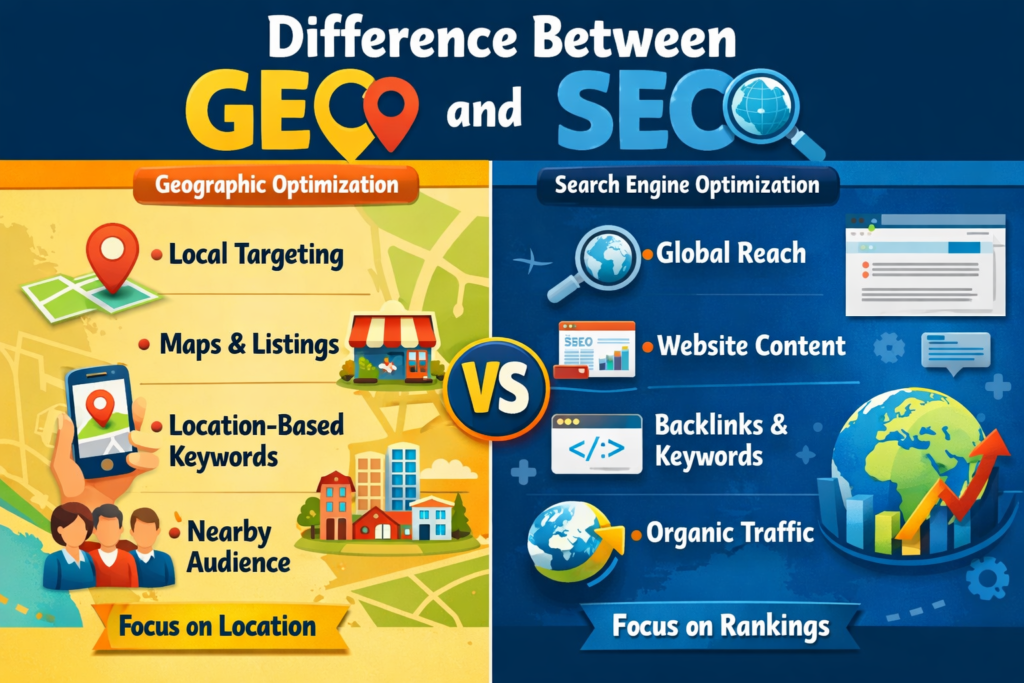
  • SEO will continue to evolve
  • GEO will become essential
  • The content strategies based on artificial intelligence will prevail.
  • Quickly developing brands will be at advantage.

Conclusion

Search Engine Optimization (SEO) is implemented to ensure that your site appears in the search engines and Generative Engine Optimization (GEO) provides your content with a chance to be comprehended, believed and put into practice by the artificial intelligence.

The AI-driven world does not permit the use of SEO only. Both GEO and SEO are to be welcomed by the businesses and marketers in order to remain visible, relevant and competitive.

Now is the right time to progress to brands that not only optimise the search engine but they are also intelligent.

Leave a Comment

Your email address will not be published. Required fields are marked *

Scroll to Top